Holistic Birth Education: Birth as a spiral
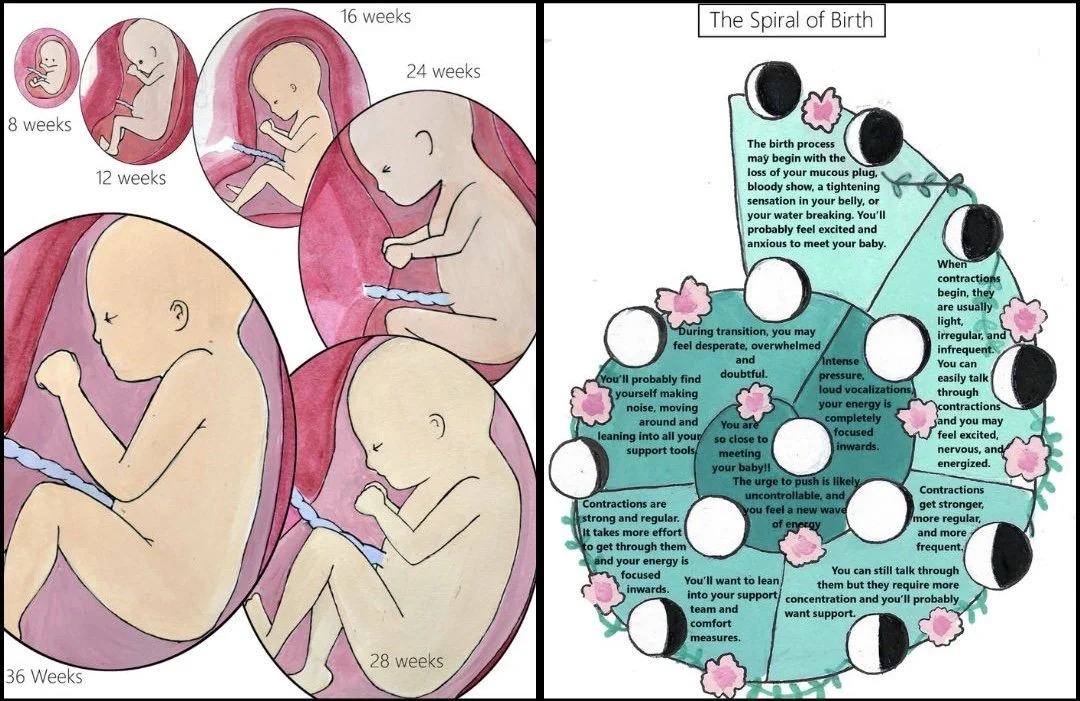
Illustrations: Catie Atkinson
A Holistic Approach to Pregnancy, Childbirth, and Postpartum
Pregnancy and birth are often approached through a narrow lens. In some spaces, childbirth preparation centers almost exclusively around the medical model: timelines, protocols, measurements, interventions, and outcomes. In others, birth education may lean heavily into a singular philosophy or methodology, emphasizing one particular approach to birth such as natural childbirth, hypnobirthing, mindset work, or specific birth frameworks.
While each of these perspectives may offer valuable tools and insights, many expecting parents are left trying to piece together an understanding of birth that actually reflects the complexity of their lived experience.
A holistic approach to childbirth values the interconnected layers of mind, body, emotions, nervous system function, environment, relationships, and the unconscious.
Within this framework, we recognize that each individual arrives at pregnancy and birth shaped by personal history, family dynamics, cultural conditioning, previous experiences, stress patterns, and the environments they move through daily. Holistic birth education creates space for these realities rather than attempting to fit birth into a rigid ideology or one-size-fits-all philosophy.
This approach meets people exactly where they are in their unique pregnancy and preparation process. Whether someone is planning to give birth in or out of hospital, with or without medication, supported by an OB or midwife, holistic childbirth education offers tools for deeper understanding, informed choice, nervous system awareness, and embodied preparation that can support a wide range of birth experiences.
Rather than focusing solely on achieving a particular type of birth outcome, holistic birth preparation invites individuals into a deeper relationship with themselves throughout pregnancy, labor, birth, and postpartum.
In this blog, we’ll explore the many seen and unseen layers that influence the childbirth experience and the foundational themes inside my upcoming Holistic Birth Course.
Rooting into the body
Our body carries its own wisdom, and within it, years of experience and patterning that shapes our worldview. One of the most overlooked aspects of childbirth preparation is learning how to reconnect with the body before labor begins. Many pregnant people move through pregnancy overwhelmed by information while simultaneously feeling disconnected from their own instincts, sensations, and inner knowing.
Holistic birth preparation begins by slowing down enough to listen.
Rooting into the body means developing awareness of breath, tension patterns, nervous system responses, physical sensations, and the body’s natural rhythms throughout pregnancy and labor. This connection creates a foundation for navigating childbirth with greater presence and adaptability rather than fear and disorientation.
When individuals feel more connected to their bodies during pregnancy, they are often better equipped to make grounded decisions, regulate stress, and move through labor with increased confidence and body awareness.
I created a FREE Somatic Guide for Pregnancy to orient you to this body awareness. (Just scroll down to the email sign up to claim it!)
Reweaving the mind
The mind plays a profound role in the birth experience. Cultural narratives, previous experiences, family conditioning, trauma, fear-based messaging, and even social media can shape how birth is perceived long before labor begins.
Holistic childbirth education recognizes that preparing for birth is not only physical ~ it is also mental and psychological.
Reweaving the mind involves bringing awareness to limiting beliefs, fear conditioning, perfectionism, and internalized narratives surrounding pain, safety, control, and worthiness. Through education and conscious reflection, individuals can begin to shift from fear-based birth preparation toward a more informed, empowered, and adaptable mindset.
This process does not promise a perfect birth experience. Instead, it supports greater resilience, agency, and emotional flexibility no matter how birth unfolds.
Emotional Safety and Intelligence
Emotional safety is a critical yet often under-discussed component of physiological birth and postpartum wellbeing. Stress, fear, unsupported dynamics, and emotional dysregulation can deeply influence the nervous system during labor.
A holistic approach to birth preparation includes understanding emotional intelligence as a practical tool for childbirth.
This means learning how emotions manifest in the body, how stress responses affect labor, and how to cultivate greater self-awareness and support throughout pregnancy and birth. Emotional intelligence also includes recognizing relational dynamics, communication patterns, and the importance of feeling emotionally safe within your birth environment.
When individuals feel emotionally supported and deeply seen, the body is often better able to access states of openness, vulnerability, surrender, and physiological flow.

Sacred Ground : The Unconscious and Intuition
Birth often brings unconscious material to the surface. Old memories, fears, ancestral patterns, identity shifts, and deeply buried emotions can emerge during pregnancy, labor, and postpartum.
This is one reason birth can feel profoundly transformative.
A holistic lens acknowledges the unseen aspects of childbirth, including intuition, inner imagery, subconscious patterning, and the emotional imprints carried within the body. Rather than dismissing these experiences, this work invites deeper curiosity and compassionate awareness.
Developing trust in intuition does not mean abandoning evidence-based care or medical support. Instead, it means learning how to remain connected to inner wisdom while navigating the practical realities of pregnancy and birth.
For many, this becomes an important part of reclaiming autonomy and self-trust throughout the childbearing journey.
The foundation : Choice, Alignment and sovereignty
True birth education should expand informed choice rather than create more fear, rigidity, or polarization.
One of the central pillars of holistic birth preparation is understanding that there are many valid ways to give birth. Hospital birth, home birth, medicated birth, unmedicated birth, cesarean birth, and midwifery care all exist within a complex landscape of individual needs, circumstances, values, and medical considerations.
Holistic childbirth education supports individuals in making aligned decisions based on their unique needs rather than external pressure, fear, or ideology.
This includes learning how to ask informed questions, navigate the maternity care system, understand options and interventions, communicate boundaries, and build a support team that honors bodily autonomy and informed consent.
Birth sovereignty is not about controlling outcomes. It is about remaining connected to yourself within the process.
Physiology and Nervous system wisdom
Understanding the physiology of labor can radically change the way individuals experience childbirth preparation.
Hormones, stress responses, sensory input, emotional safety, and nervous system states all influence labor progression and the body’s innate birth processes. A dysregulated nervous system can increase tension and fear, while feelings of safety and support can help facilitate physiological labor patterns.
This is why holistic birth education places such a strong emphasis on nervous system regulation, embodiment, and stress awareness during pregnancy.
Rather than approaching birth solely through techniques and checklists, this lens helps individuals understand how the body functions during labor and how to create conditions that support physiological birth across a variety of settings.
Knowledge becomes more than information ~ it becomes integrated wisdom within the body itself.
Riding the waves : Sensation, support and surrender
One of the greatest fears surrounding childbirth is fear of pain and the unknown.
Many conventional approaches frame labor sensations as something to resist, escape, or endure. A holistic perspective instead explores how support, environment, nervous system state, mindset, movement, breath, and emotional safety influence the experience of labor sensations.
Preparing for labor means learning practical coping tools while also developing the capacity to remain present within intensity.
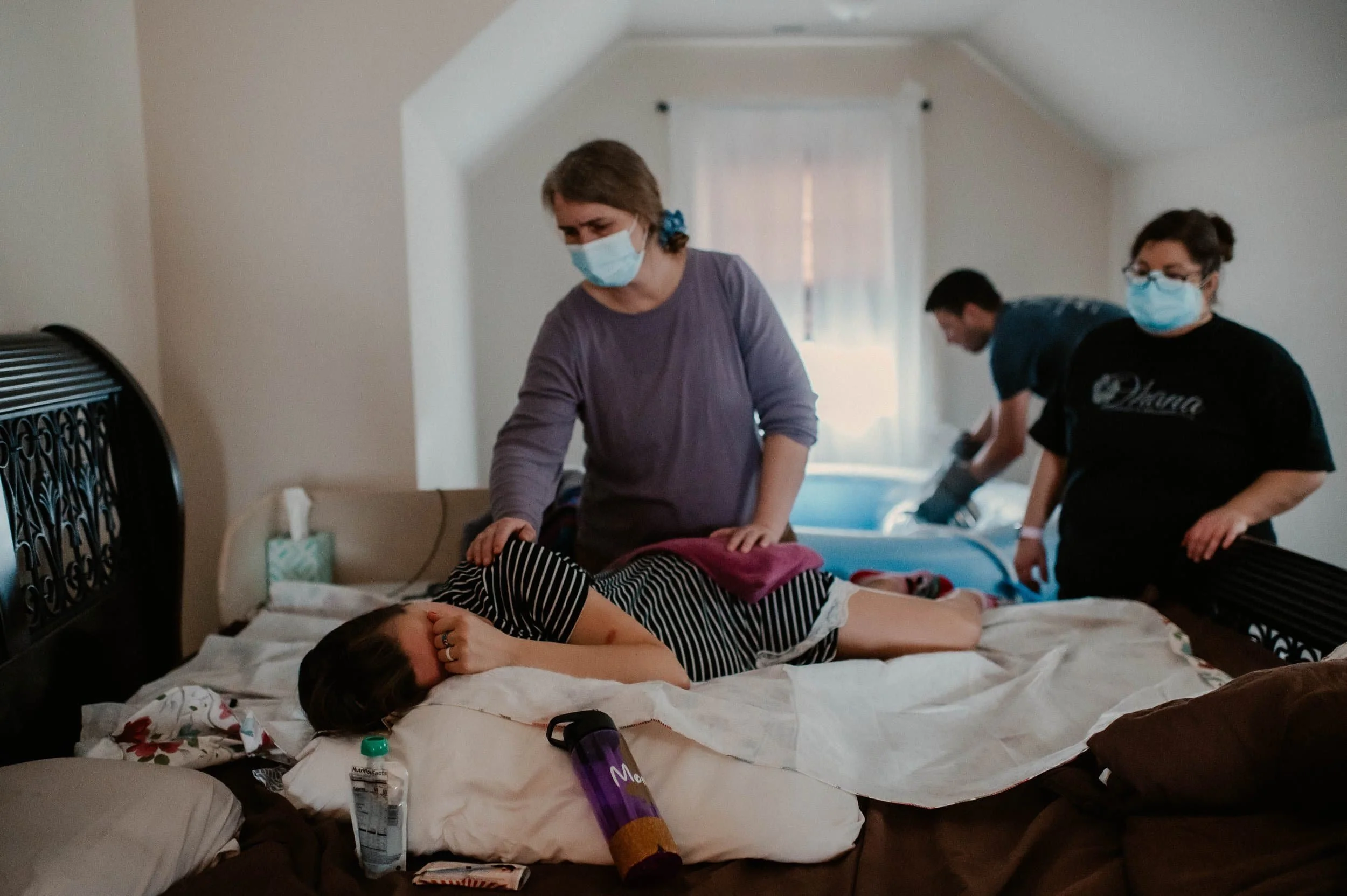
This includes understanding support techniques, partner preparation, comfort measures, movement, breathwork, advocacy, and the emotional realities of labor itself. It also includes learning when flexibility and medical support may be needed.
Surrender in birth is not passive. It is an active relationship with trust, adaptability, support, and presence.
Birth as a spiral : Crossing the threshold
Birth is not simply a medical event. It is a threshold experience.
Like a spiral, birth often revisits old layers while simultaneously initiating profound transformation. Pregnancy, labor, and postpartum can shift identity, relationships, priorities, emotional landscapes, and the way individuals understand themselves.
This transformational aspect of childbirth deserves preparation and support.
A holistic approach recognizes birth as both physiological and deeply human. It honors the reality that birth can be empowering, challenging, healing, unexpected, expansive, or all of these things at once.
Rather than reducing birth to a single moment or outcome, this framework invites individuals into a deeper relationship with the full transition into parenthood.
Immediate Postpartum : Integration and care
Postpartum recovery is often treated as an afterthought within mainstream birth education, despite being one of the most vulnerable and transformative periods of the childbearing journey.
Healing after birth requires more than physical recovery alone.
Holistic postpartum preparation includes emotional support, nervous system care, nourishment, rest, identity integration, relationship shifts, and realistic expectations for the early postpartum period. It also includes understanding how birth experiences can continue to unfold emotionally after delivery.
When postpartum care is prioritized, individuals are better supported in their healing, adjustment, and transition into parenthood.
Birth does not end at delivery. The integration matters too.
If you are ready to explore a holistic approach to postpartum, I recommend you start with my Holistic Postpartum Guide.
A More Holistic Way to Prepare for Birth
The deeper many people move into pregnancy, the more they realize they are not simply searching for information. They are searching for grounded guidance, discernment, nervous system support, and a way to feel more connected to themselves throughout the process.
That is the foundation of my upcoming Holistic Birth Course.
This course is designed for individuals preparing to give birth in any setting who want a more integrative understanding of pregnancy, labor, and birth. Through a holistic lens that bridges physiology, nervous system wisdom, emotional awareness, embodiment, and the unconscious, students are supported in preparing for birth in a way that honors their unique experience and inner knowing.
Because birth preparation is not just about what you know intellectually.
It is about what becomes integrated within the body, mind, and unconscious long before labor begins.